

This article is reviewed by Dr. Leong and is intended for general informational purposes only. It does not constitute medical advice. Please consult your GP or a qualified health professional before making changes to your diet, particularly if you have an existing medical condition.
- Whooping cough cases are rising in Singapore — mainly due to waning adult immunity and imported cases.
- Adults often don’t have the classic “whoop” — it usually presents as a stubborn cough that lasts more than two weeks.
- Your last tetanus shot was likely a pertussis booster too — the Tdap vaccine covers tetanus, diphtheria, and pertussis (whooping cough).
- Pregnant? Get the Tdap vaccine in your third trimester — it passes protective antibodies to your newborn before their own vaccinations begin.
- Cough lasting over two weeks and not improving? See a GP — don’t wait it out.
Pertussis — better known as whooping cough — is a disease most Singaporeans associate with early childhood, something vaccinated against and forgotten. And for much of the past several decades, that assumption was broadly justified.
Singapore’s vaccination rates are high, the disease was uncommon, and the public health system had it largely under control. But that picture is changing.
As Dr Leong Choon Kit notes, there are now clear signs of an increase in the number of people infected — cases brought in by visitors from overseas, and a growing cohort of older adults whose immunity, built up in childhood, is quietly waning.
Understanding whooping cough in 2026 is not about alarm. It is about awareness — knowing how to recognise a suspicious cough, understanding why your childhood vaccination may no longer fully protect you, and knowing exactly what to do if you or someone in your family becomes unwell.
This guide draws on direct clinical experience to help you navigate all of that.
1. Could My Persistent Cough Be Pertussis?
The scenario is a familiar one in GP clinics across Singapore: a patient arrives having coughed for two weeks or more, having tried every over-the-counter remedy available, and finding that nothing has made a meaningful difference.
Most of the time, there is a more common explanation — post-viral cough, allergic rhinitis, or gastro-oesophageal reflux, among others.
But pertussis belongs on the list of possibilities, and in the current climate it belongs higher on that list than it did five years ago.
The critical first step is to see a doctor rather than continuing to self-manage.
In a primary care setting — whether a private GP clinic or a polyclinic — the approach is methodical: history and physical examination first, to identify the most probable cause.
“In a primary care clinic, we rely on history and physical examination to sieve out the probable ones.” — Dr Leong.
If clinical assessment raises genuine suspicion of pertussis, the next step is a nasopharyngeal swab for a PCR test.
It is worth knowing that these tests can be expensive at private facilities, and if cost is a concern, a GP can refer patients to public institutions where testing may be more accessible.
The broader message is straightforward: a cough that does not respond to standard treatment and is lasting beyond two weeks deserves a proper clinical assessment.
The cause may well be something entirely unrelated to pertussis — but ruling it in or out requires a doctor, not a pharmacy shelf.
If your doctor orders tests and the results leave you with questions, our guide on understanding what your blood test results are really telling you can help you make sense of what comes back.
2. What Whooping Cough Actually Looks and Sounds Like
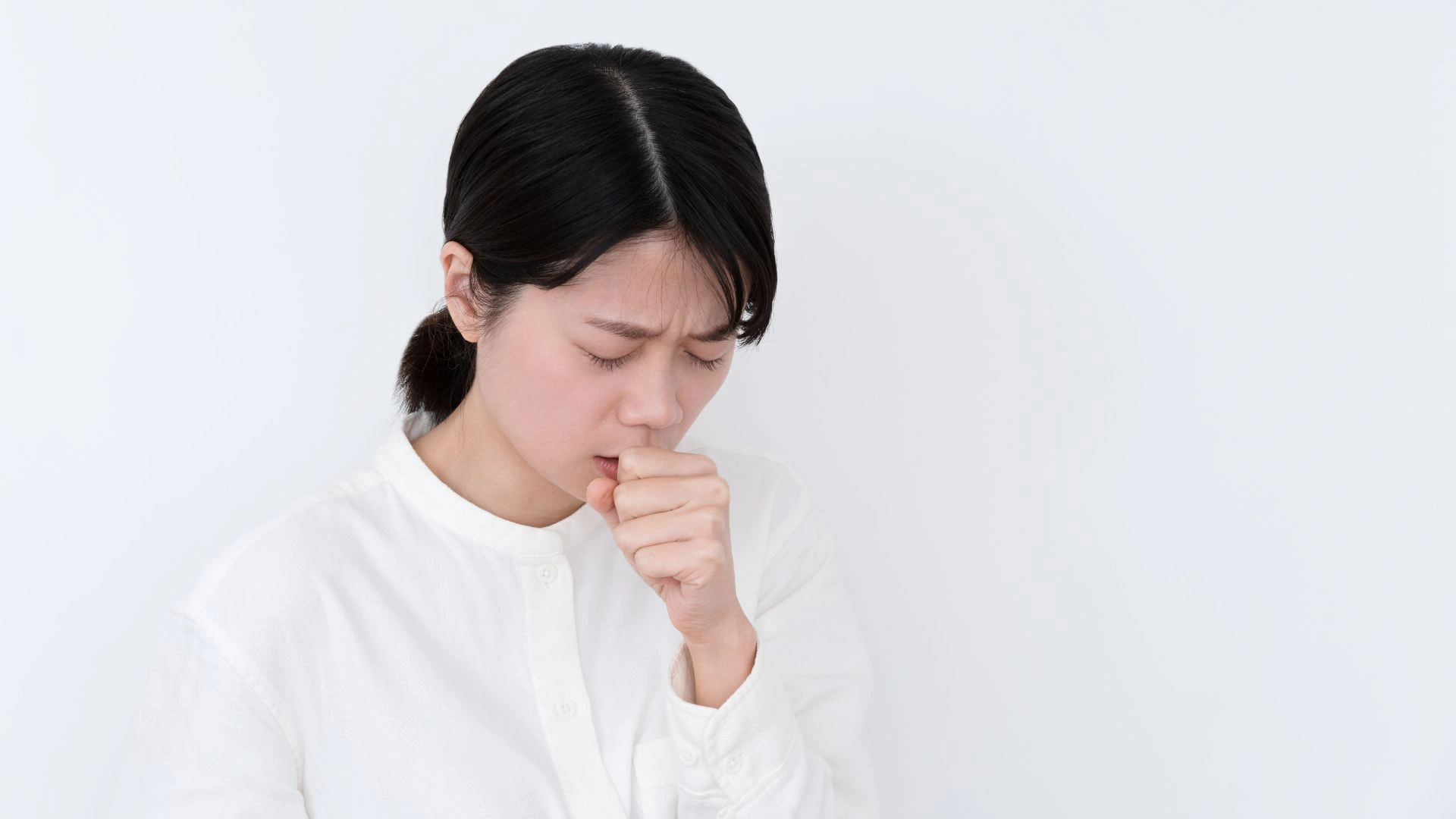
Part of what makes pertussis clinically deceptive is that it begins entirely unremarkably.
First 1 to 2 weeks – Catarrhal Phase
The first one to two weeks of infection — the catarrhal phase — look and feel like an ordinary cold: runny nose, mild fatigue, and a low-grade fever.
There is nothing at this stage to distinguish it from the dozens of other respiratory viruses circulating at any given time.
And yet this is the period during which the infection is most contagious, spreading through respiratory droplets before the patient or anyone around them suspects anything unusual.
After 2 weeks – Paroxysmal Coughing Phase
It is in the second phase that pertussis reveals itself. The cold symptoms begin to ease, and in their place comes a cough of an entirely different character — severe, paroxysmal fits that arrive in rapid, uncontrollable bursts.
The coughing fits can be so prolonged and so forceful that the patient is left gasping for air, and it is at the end of this gasping inhalation that the disease earns its common name.
“The whooping sound is typical and unique. Often the patient may also experience breathing difficulties or shortness of breath.” — Dr Leong Choon Kit.
The whooping sound is typical and unique — a high-pitched, almost crowing intake of breath that follows the coughing burst. Breathing difficulties and shortness of breath accompany these episodes, and in severe cases, the physical force of repeated violent coughing can cause its own complications.
It is also worth understanding that the whooping sound is more commonly heard in children than in adults. Vaccinated adults who contract pertussis — typically those whose immunity has waned — may present with a prolonged, persistent cough without the classic whoop.
This atypical presentation is one reason the disease goes unrecognised in adults, who may spend weeks managing what they assume is a stubborn post-viral cough.
3. “I Was Vaccinated as a Child — Why Am I Still at Risk?”
Singapore’s childhood vaccination schedule is comprehensive. Coverage begins within the first months of life and continues through the school years, producing a population with a very high rate of protection against pertussis from an early age.
For male Singaporeans, the protection extends further still — those who serve national service receive vaccination updates through their respective uniformed groups until they are discharged from service, adding another layer of protection into early adulthood.
The problem is not whether you were vaccinated. The problem is time.
Pertussis vaccine immunity is not permanent — it wanes, and the clinical recommendation is that boosters should be renewed every ten years. For many adults who received their last vaccination during national service or in their school years, that ten-year window has long closed, often without their awareness.
They are not unprotected in the way an unvaccinated person is, but their immunity has diminished to a point where exposure to the bacterium carries real risk.
The Tdap Insight — More Singaporeans Are Covered Than They Realise
Here is where Singapore’s vaccination landscape has a genuinely reassuring quirk that many people are unaware of. In Singapore, the pertussis vaccine is not administered on its own — it is bundled with the tetanus and diphtheria vaccines in a combined formulation called the Tdap vaccine.
This means that whenever a Singaporean visits a doctor after a wound or a cut and is advised to update their tetanus vaccination, the injection they receive is Tdap — and they have, without necessarily realising it, also received a pertussis booster.
“Often when a Singaporean has a wound or a cut and the doctor advises the Tetanus vaccination update, the vaccine used is Tdap. So, in that sense, some of us are covered as the need arises.” — Dr Leong Choon Kit.
The practical implication of this is useful: if you can remember the last time you had a tetanus shot — perhaps after a kitchen accident, a sports injury, or a workplace incident — that is also likely the date of your last pertussis booster.
For those who have not had a tetanus update in over a decade, or who cannot recall when they last did, a conversation with a GP about Tdap is a reasonable and straightforward step.
It is also worth noting that there is currently no mandated programme in Singapore for regular Tdap updates in adults. Dr Leong’s personal view is that this likely reflects the historical context — the vaccine has been commonly administered and pertussis infection rates were low for many years.
The recent uptick in cases is precisely why awareness of personal vaccination status matters more now than it did a decade ago.
Enrolling with a regular GP under Healthier SG makes staying on top of vaccinations like Tdap straightforward and more affordable — read our guide on the Healthier SG scheme and what it means for patients.
4. Treatment — What to Expect and Why You Need to See a Doctor

Pertussis is a bacterial infection, and antibiotics are the primary treatment. This is an important distinction from viral respiratory infections, where antibiotics play no role — with pertussis, getting the right diagnosis and starting treatment promptly makes a genuine difference to both the severity of the illness and the risk of spreading it to others.
Antibiotics & Timing
The timing of antibiotic treatment matters.
Treatment is most effective when started in the catarrhal phase — the early, cold-like stage of the illness.
Once the paroxysmal coughing phase is well established, antibiotics become less effective at altering the course of the disease, though they remain important for limiting transmission. This is one of the most clinically significant arguments for seeking medical attention early, rather than waiting to see whether a persistent cough resolves on its own.
Pertussis Treatment Duration
Treatment duration for pertussis can be longer than patients expect — this is not a standard five-day antibiotic course. It is very important to be reviewed and treated by the same doctor until fully well.
Continuity matters because the doctor can assess recovery accurately over time, adjust treatment if needed, and confirm when the patient is truly clear of infection. Switching doctors mid-course or stopping antibiotics early are both patterns that can undermine recovery.
When do you need other treatment?
For patients who develop severe illness, particularly those who are very young, elderly, or immunocompromised, antibiotics alone may not be sufficient.
Supportive treatment — oxygen therapy, intravenous fluids, close monitoring — becomes necessary for those requiring emergency care.
Low oxygen saturation is the key red flag that should prompt an immediate visit to the emergency department of any hospital in Singapore.
5. How Long Are You Contagious — And What About Your Family?

Isolation During Recovery
Pertussis is highly contagious — one of the most contagious bacterial infections known. It spreads through the respiratory droplets produced by coughing and sneezing, and close household contacts are at significant risk of infection if not protected.
Isolation from family members during the infectious period is strongly advised, and the general principle is to remain isolated until symptoms — particularly coughing — have resolved and treatment is well underway.
For patients on antibiotics, the clinical guidance is that the period of contagiousness typically ends around five days after beginning effective treatment. Until that point, close contact with vulnerable household members — particularly unvaccinated infants, pregnant women, and the elderly — should be minimised as much as practically possible.
Protecting Your Household
The second strategy for protecting the household goes beyond isolation. Encouraging catch-up vaccination among uninfected household members is another possible and important strategy.
If a confirmed case of pertussis is identified in a household, the appropriate response is not only to treat the infected individual but to review the vaccination status of everyone else in the home.
For contacts who are overdue for their Tdap booster, getting vaccinated promptly reduces both their risk of developing illness and the risk of a chain of transmission continuing within the household.
6. Complications — What Pertussis Can Do Beyond the Cough
The Impact on the Lungs
The cough is the defining symptom of pertussis, but the disease’s potential consequences extend well beyond the respiratory system. As Dr Leong explains, every lung infection causes some damage to the lungs, and some people may have compromised respiratory function even after recovering.
This reduced baseline can persist for months or longer, and the physical violence of the coughing fits themselves can cause direct mechanical injury — rib fractures are a recognised complication in adults with severe pertussis, alongside burst blood vessels in the eyes and fainting from oxygen deprivation during prolonged coughing episodes.
Beyond the Lungs: Cardiovascular and Neurological Effects
The complications of severe pertussis do not stop at the chest. Dr Leong notes that beyond respiratory function, some patients may experience compromised cardiovascular and neurological function.
These systemic complications are far more common in infants and those with weakened immune systems, but they serve as an important reminder that pertussis is not simply a bad cough that eventually resolves. In vulnerable populations, it is a disease that warrants urgent medical attention and, where necessary, hospital-level care.
Respiratory health doesn’t stop at infections — if you live in Singapore, haze season poses its own risks to your lungs. Read our doctor’s guide on how to protect yourself against haze in Singapore.
7. Who Is Most at Risk in Singapore?
The clearest risk factor is vaccination status. As Dr Leong states directly: those who are unvaccinated or whose vaccine status is not updated are the ones who are most vulnerable. This applies across age groups, but the specific vulnerabilities differ significantly depending on the population in question.
The Critical Window: Newborns Before Their First Vaccination
In Singapore, infants begin their vaccination schedule at their second or third month of life. The weeks before that first vaccination represent a critical and unavoidable window of vulnerability — a period during which the newborn has no vaccine-derived protection of their own and must rely on antibodies passed from the mother during pregnancy.
This is why the vaccination of pregnant mothers is not simply recommended but genuinely important.
Obstetricians routinely advise vaccination in the third trimester specifically to ensure that maternal antibodies are transferred to the newborn before birth, providing a degree of protection during those first two to three months before the baby’s own immunisation can begin.
The protection this provides to a newborn — whose respiratory system is not equipped to handle the violence of pertussis coughing fits — can be life-saving.
“A word here is to encourage all expecting mothers to heed the advice by their doctors to be vaccinated during their pregnancy.” — Dr Leong Choon Kit
The clinical message is direct and deserves emphasis: if you are pregnant and your obstetrician or GP has recommended Tdap vaccination during your pregnancy, this is not an optional precaution. It is one of the most effective things you can do to protect your newborn during the period when they are most vulnerable and least able to be protected any other way.
Older Adults and the Immunocompromised
The elderly represent a second key vulnerable group, for reasons that mirror the waning immunity story in adult vaccination. As the immune system ages, its ability to mount robust responses to both infection and vaccination diminishes.
Elderly patients whose childhood immunity has long since waned and who have not maintained their Tdap boosters are at meaningful risk — and because their underlying health may already be compromised, the consequences of infection tend to be more serious.
Anyone with a weakened immune system — whether through chronic illness, immunosuppressive medication, or other medical conditions — also carries elevated risk.
For these individuals, the advice is the same: review vaccination status with your GP, isolate promptly if exposure is suspected, and seek medical attention early rather than managing symptoms at home.
Knowing when to seek urgent help for a child is one of the most important skills a parent can have — our GP’s guide on how to check for appendicitis symptoms in children at home covers another condition where early action makes all the difference.
Conclusion
Whooping cough is not a disease that belongs only in history books or in the early years of childhood. The recent increase in cases in Singapore is a reminder that the conditions which keep infectious diseases at bay — high vaccination rates, timely boosters, a well-functioning public health system — require active maintenance, not passive assumption.
The three most practical things any adult in Singapore can take from this article are these:
- Cough lasting >2 weeks and not improving → See a GP promptly
- Last tetanus shot >10 years ago or unsure → Get Tdap booster
- Pregnant → Get Tdap vaccine in third trimester (protects newborn)
Pertussis is treatable, preventable, and for most people in Singapore, avoidable. But that avoidance is not automatic — it requires awareness, action, and the willingness to see a doctor when something does not feel right.
WHOOPING COUGH IN SINGAPORE
Frequently Asked Questions
Is whooping cough common in Singapore right now?
Cases have risen recently. High vaccination rates kept it rare for years, but waning adult immunity and imported infections are changing that.
What does whooping cough sound like in adults?
Often no whoop at all. Usually a severe, persistent cough lasting weeks that doesn’t respond to anything over the counter.
I was vaccinated as a child — do I need a booster?
Yes, if it’s been over 10 years. Immunity wanes. Talk to your GP about a Tdap update.
Did my last tetanus shot protect me against whooping cough too?
Most likely. In Singapore, tetanus updates use the Tdap vaccine — which includes pertussis automatically.
Should pregnant women get the whooping cough vaccine?
Yes — in the third trimester. It passes antibodies to the newborn for the first 2–3 months before their own vaccinations begin.
When should I go to A&E?
Go immediately if you have oxygen saturation below 95%, severe breathing difficulty, lips or nails turning blue, or coughing fits causing fainting or vomiting.
How long is someone contagious?
Until symptoms clear, or ~5 days after starting antibiotics. Isolate from infants, pregnant women, and the elderly.
Can whooping cough cause serious complications?
Yes — rib fractures, pneumonia, and in severe cases cardiovascular or neurological effects. Worst outcomes in infants and the immunocompromised.
Medically Reviewed
About the Experts
 Reviewer
Dr Leong Choon Kit
MBBS, M.Med (Public Health), GDFM, MCFP(S), FCFP(S), FAMS (Family Medicine) — Adjunct Assistant Professor, Duke-NUS & NUS
Dr Leong Choon Kit is a family physician and public health advocate with extensive experience in primary care, public policy, and vaccination initiatives. He leads Tampines Family Medicine Clinic and the Class Primary Care Network, and co-authored Singapore's Adult Vaccination Guidelines. An Adjunct Assistant Professor at both Duke-NUS Medical School and NUS, he has spent over a decade mentoring pre-medical students across all three local medical schools and is deeply committed to nurturing the next generation of doctors.
Written By
About the Writer
 Writer
Timothy Leong
Writer, Content Editor & Marketing Specialist — MMC
Timothy Leong is the writer, content editor, and marketing specialist at MMC. With experience in writing and creating websites for local businesses, he makes sure that everything online runs smoothly.