
This article shares personal experiences and is for informational purposes only. It is not career or medical advice.
TL;DR – Why become a Doctor in Singapore
- The profession uniquely blends the art of caring for people with scientific knowledge and technical skill, offering endless ways to make a meaningful societal impact.
- Broad exposure (like discovering a new passion in university or reflecting during national service) can reveal medicine as the right path, even if you start with other interests.
- Commitment, resilience, and personal conviction matter more than a perfect origin story — many successful doctors entered through pragmatic decisions rather than lifelong certainty.
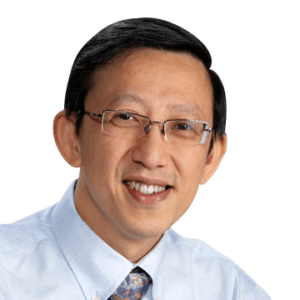
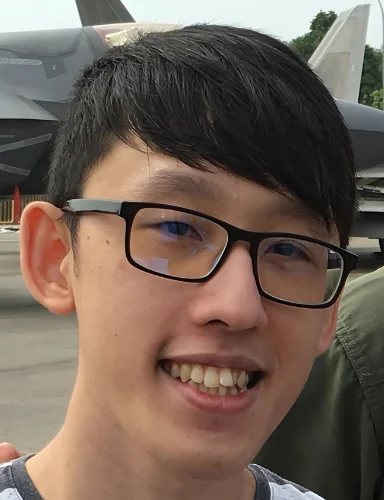
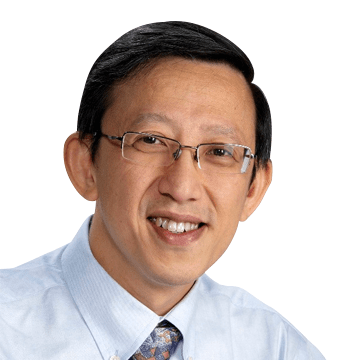
In the inaugural episode of the Uncle Talks Podcast, three seasoned physicians—Dr Kenneth Tan, a private general practitioner and medical school assessor; Dr John Hsiang, a gastroenterologist practising in private hospitals; and Dr Leong Choon Kit, a family doctor with over three decades of experience—opened up about their paths into medicine.
Their stories, shared with candour and humour, reveal the diverse motivations that draw individuals to this demanding yet rewarding profession. Far from a straightforward choice, their journeys highlight the blend of serendipity, societal impact, and intellectual curiosity that defines a career in healing.
As Dr Leong Choon Kit, who has mentored countless pre-med students, noted, these tales “may not be specific to any one person, but definitely it will cover a wide range of possibilities to get into medical school and why one would want to choose to be a doctor.”
Their conversation begins with a simple yet profound question: why did each of them choose medicine?
What emerges is not a uniform narrative of heroic aspirations, but a tapestry of thoughtful decisions shaped by life stages, influences, and realisations about the field’s unique demands.
Dr Kenneth’s Path: Merging Art, Science, and Societal Impact
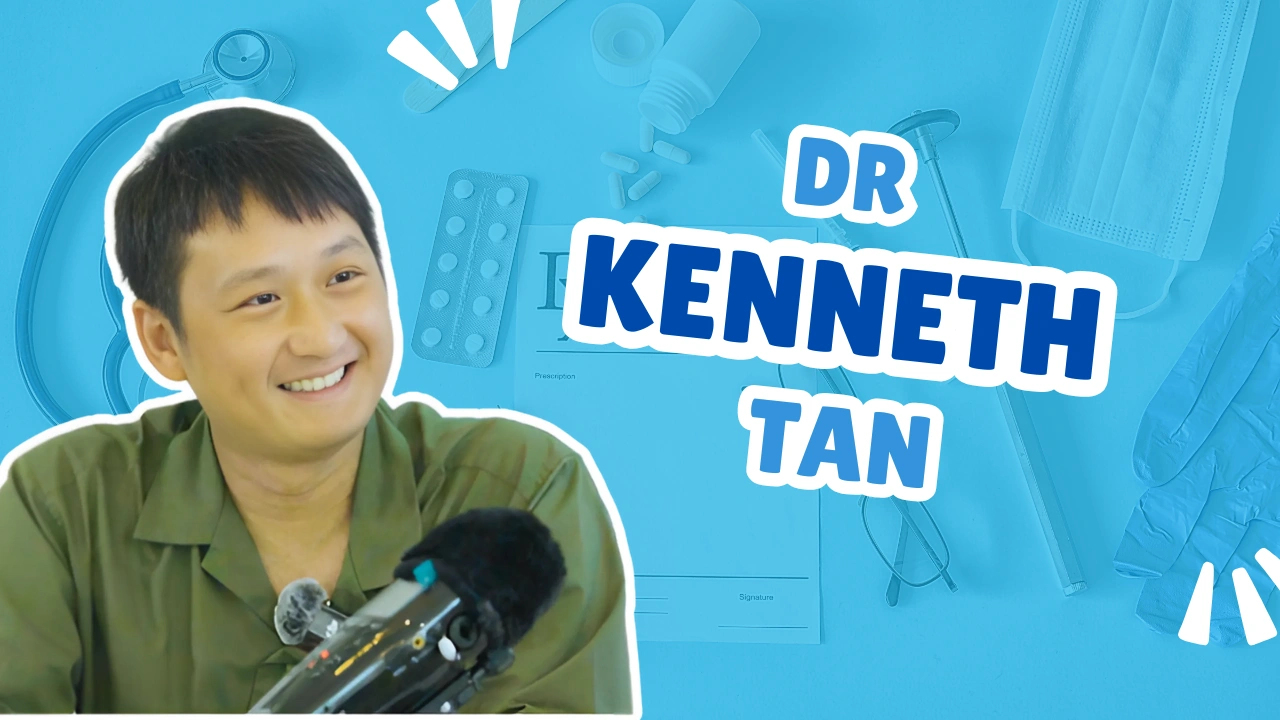
For Dr Kenneth Tan, the seeds of a medical career were sown during a pivotal time of reflection. Fresh out of junior college and navigating his national service (NS) period, he grappled with a fundamental question: “What can I do that makes the greatest impact on society?”
Amid the rigours of military life, he weighed options in the technical sciences, such as computing or engineering. Yet, medicine stood out as something more holistic. “I felt that out of the technical arts, the technical sciences right, you could do computing you could do engineering, but medicine is something that marries both the art of caring for a person with the knowledge that you require, you need for a technical skill,” he explained. This fusion appealed to him deeply—a profession where empathy and expertise intertwined to effect real change in people’s lives.
What began as an idealistic pursuit evolved into a deeper appreciation once he entered the field. Dr Kenneth Tan discovered medicine’s expansive scope, particularly its intersection with technology. “And the second thing is after I went into medicine, then I realised there’s a lot of scope for you to be contributing in terms of tech in the world of tech because everybody wants their healthcare to be delivered as high quality and as high tech as possible,” he shared.
This realisation affirmed his choice, as he witnessed how innovations transformed practice from his early days to the present.
In Singapore’s fast-paced medical landscape, where advancements like telemedicine and AI are reshaping care, Dr Kenneth Tan’s story underscores medicine’s adaptability. It’s not just about treating ailments; it’s about pioneering ways to deliver better, more efficient healthcare.
His journey reminds aspiring doctors that the profession offers endless avenues for growth, blending humanitarian service with cutting-edge progress.
Dr John Hsiang’s Journey: From Architecture Dreams to Biological Fascination
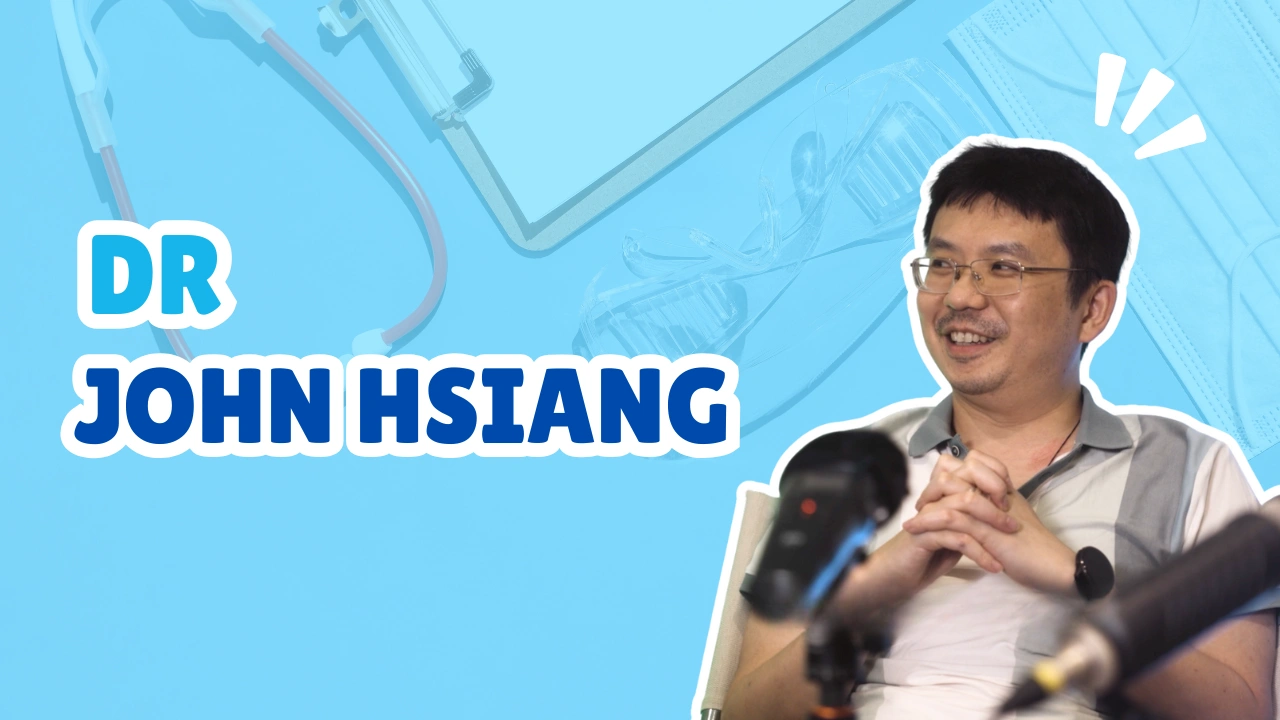
Dr John Hsiang’s entry into medicine unfolded against a backdrop of youthful exploration and geographical shifts. Born and raised in New Zealand, with education spanning there and Australia, his path diverged from initial ambitions in the creative arts. At 17 or 18, during his final year of high school, he immersed himself in fine arts and graphic design, eyeing architecture.
Applications to schools in Melbourne and Auckland followed, but a conversation with current students shifted his trajectory. “A few of them basically said it’s quite busy, you don’t get to sleep and it’s not very vibrant,” he recalled. Seeking independence, he left home for the University of Otago in Dunedin, initially drawn to dentistry on his father’s advice: “Dentistry is quite good, you earn a lot of money and all that.”
Yet, fate intervened in the form of Otago’s unique first-year health science programme, where students from medicine, dentistry, pharmacy, and physiotherapy shared foundational courses. It was here that Dr John Hsiang encountered biology for the first time. “I fell in love with biology… I never done biology in my life in high school, so I thought okay, this is quite interesting, maybe I could do biology,” he said.
The breadth of medicine captivated him: “This is a very interesting and very wide field, there are a lot of different things you can do, maybe I’ll just do that.” Unlike New Zealand’s system, which required a common academic year before specialising, his experience highlighted the value of broad exposure. Once committed, he “never turned back,” finding in medicine a vibrant alternative to the sedentary life of architecture.
Dr John Hsiang’s narrative, enriched by his “foreigner” status in Singapore—arriving as a specialist after training abroad—illustrates how medicine can emerge from unexpected detours. His story emphasises the profession’s intellectual allure, where curiosity about the human body leads to lifelong engagement. In a Singaporean context, where medical education draws from global models, his path serves as a reminder that diverse backgrounds enrich the field, bringing maturity and fresh perspectives to patient care.
Dr Leong Choon Kit’s Story: Serendipity and Practical Choices
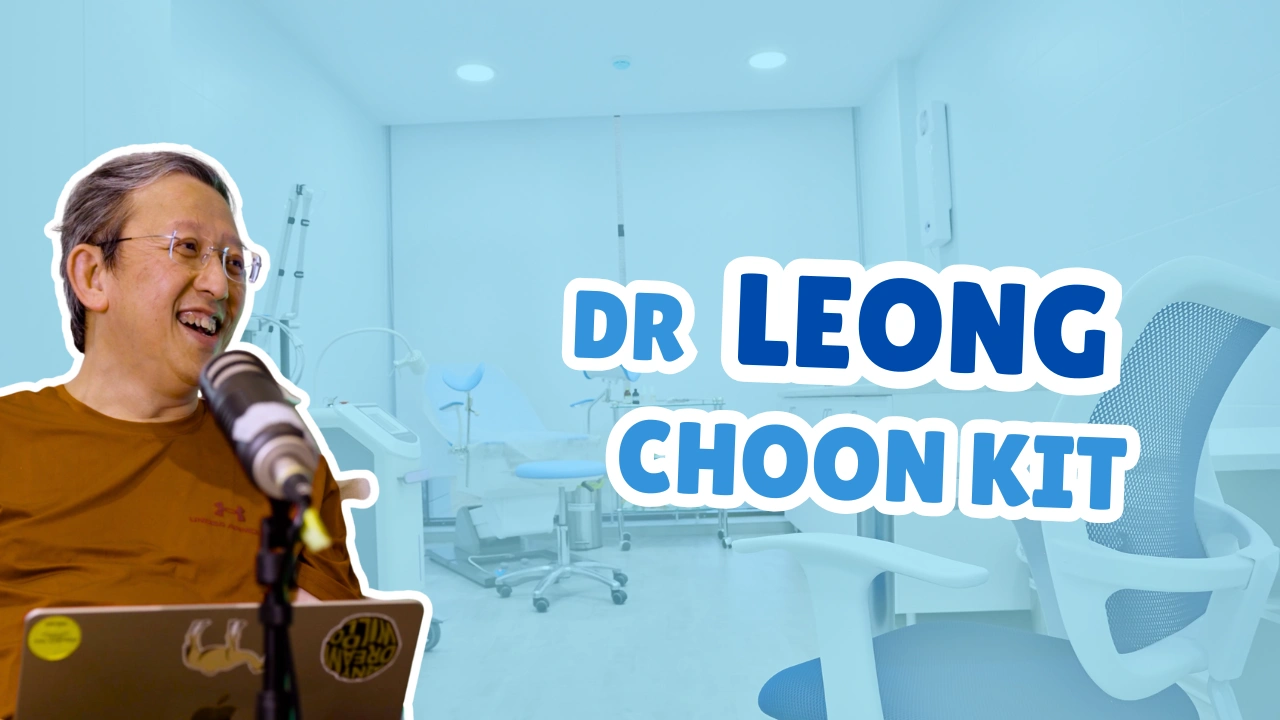
Dr Leong Choon Kit’s route to medicine was marked by pragmatism and a touch of serendipity, diverging from more romanticised callings. Hailing from a reputable junior college, he excelled academically and was on track for a Public Service Commission (PSC) scholarship. His initial passion lay elsewhere: “My first choice was actually wanted to do Chinese, I wanted to be a Chinese teacher… the PSC scholarship that I applied to is to do a degree in Chinese teaching in Beijing.”
Dentistry and medicine were secondary options, influenced by peers applying to med school. “Many of my classmates at the same time also applied to medical school as well, so I just decided I just go along,” he admitted.
The turning point came during his officer cadet school (OCS) training in infantry, a gruelling period that tested his resolve. Towards the end of his junior term, an unexpected question arose: “Will you want to continue in the scholarship application or would you want to do something else?” Sensing an opportunity, he intuited that med school acceptance might be on the horizon.
“The smart part of me must be thinking why that question all of a sudden… so I figured out that I might have been considered into medical school already,” he reflected. Opting for the certainty in hand over an uncertain scholarship, he chose medicine. “I decided that I would rather have what is in my hand than what may or may not come… and true enough, I got into med school.”
Unlike his co-hosts’ deliberate pursuits, Dr Leong Choon Kit’s entry was “no high and fancy kind of calling at that stage.” He entered naively, answering questions with unfiltered honesty, yet was accepted.
His story demystifies the notion of a predestined vocation, showing how practical decisions and timing can lead to a fulfilling career. With years of teaching and mentoring, he now advises pre-med students on similar crossroads, emphasising that medicine’s rewards unfold over time, even if the initial spark is understated.
Common Threads: The Art and Science of Healing
Across these narratives, a shared theme emerges: medicine as a harmonious blend of art and science. Dr Kenneth Tan articulated it explicitly, viewing it as “marrying both the art of caring for a person with the knowledge that you require.” Dr John Hsiang’s fascination with biology’s intricacies echoes this, while Dr Leong Choon Kit’s pragmatic pivot highlights the profession’s accessibility to those open to opportunity.
In Singapore, where medical training is rigorous and competitive, these stories reveal that motivations vary—from societal impact and intellectual breadth to serendipitous choices—yet all converge on a commitment to human welfare.
The doctors’ reflections extend beyond personal anecdotes, touching on medicine’s evolving nature. Dr Kenneth Tan’s enthusiasm for technology’s role in enhancing care points to a future where innovation amplifies the human touch. Dr John Hsiang’s international training underscores the maturity gained from diverse paths, a boon in Singapore’s multicultural healthcare system. Dr Leong Choon Kit, with his long tenure, reminds us that the journey doesn’t require grand epiphanies; sustained conviction carries one through challenges.
Lessons for Aspiring Healers
These tales offer invaluable insights for those contemplating medicine. The profession demands resilience, as evidenced by the doctors’ navigations through uncertainty. Dr Kenneth Tan’s societal focus encourages weighing impact, while Dr John Hsiang’s shift from architecture advises exploring broadly before committing. Dr Leong Choon Kit’s story cautions against over-romanticising the choice, advocating for seizing tangible opportunities.
In a field where art meets science, the true essence lies in caring for others amid technical complexity. As the podcast hosts affirm, medicine’s appeal endures because it allows for profound contributions, whether through direct patient interaction or broader advancements.
For Singapore’s next generation of doctors, these journeys illuminate that the path, though varied, leads to a shared purpose: improving lives one decision at a time.
Reflections on a Lifelong Commitment
Ultimately, the Uncle Talks episode transcends individual stories, painting a portrait of medicine as a dynamic vocation. The doctors’ openness demystifies the choice, showing it’s often a mosaic of influences rather than a singular revelation.
In Singapore’s advanced healthcare ecosystem, where professionals like these three bridge education, practice, and mentorship, their experiences inspire.
As Dr Leong Choon Kit aptly summarised, “It will cover a wide range of possibilities to get into medical school and why one would want to choose to be a doctor.”
For anyone pondering this path, their words serve as a beacon: medicine rewards those who embrace its blend of heart and intellect, promising a career of endless discovery and service.
Want to hear more about resilience, timing, and the real-life moments that shape a medical career? Listen to the original Uncle Talks Podcast.
FAQ – Why become a Doctor in Singapore
1) Why do doctors in Singapore choose medicine as a career?
Doctors often choose medicine for a mix of reasons: the desire to make a meaningful societal impact, fascination with biology and the human body, intellectual challenge, and the unique blend of caring for people (the “art”) with scientific knowledge (the “technical skill”).
In Singapore, practical factors like national service timing and scholarship opportunities can also play a role.
2) Do you need a strong passion or “calling” to become a doctor in Singapore?
Not necessarily. While passion helps sustain you through the long training and demanding career, many doctors enter through thoughtful decisions, curiosity, or seizing an opportunity — rather than a single dramatic moment. Commitment and resilience matter more than an initial “calling”.
3) Is medicine still a good career choice in Singapore in 2026?
Yes — medicine remains rewarding for those who value helping others, continuous learning, and contributing to society.
However, it’s competitive, stressful, and involves lifelong exams and adaptation to new technology. It’s not primarily about high earnings; many doctors emphasise impact and variety over money.
4) How competitive is medical school admission in Singapore today?
Extremely competitive. Thousands of top students (A-Level 90-pointers, high IB scores, polytechnic high achievers) apply to NUS, NTU, and Duke-NUS each year.
Strong academics are essential, but interviews look for clarity of purpose, ethical thinking, leadership, volunteering, and real healthcare exposure.
5) Can someone from a non-science background become a doctor in Singapore?
Yes — especially through postgraduate routes like Duke-NUS, which accepts graduates from any discipline (e.g., arts, music, theology). These students often bring maturity and diverse perspectives, which many educators value.
6) What role does national service play in deciding to study medicine in Singapore?
National service (for male citizens/PRs) is a common reflection period. Some doctors made their final decision during NS, weighing options or receiving medical school offers. It can clarify priorities when facing real-life pressures.
7) Should I study medicine if my parents want me to?
Only if it aligns with your own interests. Several doctors noted that parental pressure or chasing prestige/money often leads to disillusionment later. The best doctors follow their own conviction — not external expectations.