
This article shares personal experiences and is for informational purposes only. It is not career or medical advice.
What actually matters in medical school interviews
-
1
Grades get you an interview, but everyone there is already exceptional — character, not scores, decides who gets in.
-
2
Assessors can spot coached answers quickly; authentic purpose and genuine self-reflection matter far more.
-
3
Real healthcare exposure matters — clinic attachments, volunteering, and leadership give you stories no textbook can.
-
4
In group exercises, quiet candidates can still score well — helping the team move forward matters more than speaking the most.
-
5
Not getting in doesn’t mean you’re not good enough — Duke-NUS and overseas routes are legitimate paths into medicine.
Every year, thousands of Singapore’s brightest students line up to knock on the same door. They arrive with near-perfect A-Level scores, IB results hovering around 45, and polytechnic GPAs that leave little room for improvement.
On paper, they are essentially identical. And yet, only a fraction of them will receive an offer from the National University of Singapore’s medical school or its local counterparts. The question that haunts every applicant — and the parents who have quietly pinned their hopes to the outcome — is deceptively simple: what actually makes the difference?
In an episode of the Uncle Talks Podcast, three Singapore doctors sat down to answer exactly that.
Dr Kenneth Tan is a private GP running a clinic in Punggol and a long-serving assessor in NUS’s undergraduate medical programme.
Dr Leong Choon Kit is also a GP who has taught across all three local medical schools and has spent more than a decade guiding pre-med students through the application process.
Dr John Hsiang is a gastroenterologist at Farrer Park Hospital with international training in New Zealand and Australia.
Together, they bring the rare perspective of people who have sat on both sides of the table — as doctors who found their way into the profession under very different circumstances, and as educators and assessors who have watched the next generation try to do the same.
Their conversation was not a checklist. It was something richer — an honest, sometimes wry examination of what the selection process is really looking for, what candidates consistently get wrong, and what the medical profession genuinely demands of the people who enter it.
The Playing Field Is Already Level — So Grades Are Not Enough
Before any conversation about standing out can begin, it is worth understanding the baseline. Dr Kenneth Tan, who has assessed many candidates at NUS, is clear-eyed about what assessors encounter on interview days. “Most of them are excellent,” he said. “I don’t think there’s a poor candidate out of all those that we’ve met.”
The structure of the process reflects this. Schools screen portfolios first, selecting a manageable cohort for in-person assessment days. Those days involve a mix of solo tasks, group exercises, and formal interviews.
Each assessor contributes only a small percentage of a candidate’s total score. No single interaction decides the outcome — but the accumulated impression across every station matters enormously. As Dr Kenneth Tan explained, “it’s actually your total performance that will determine whether you are offered the position or not.”
Once a candidate reaches the interview stage, the academic race is largely over. The new competition is not against numbers on a transcript. It is against a room full of people who are equally exceptional — and the only differentiator left is who you actually are.
Clarity of Purpose: The Quality That Rises Above Everything Else
If there is one theme that the three doctors returned to more than any other, it is this: the candidates who stand out know why they want to be doctors. Not a rehearsed version of why. Not the version shaped by an interview coach.
The real version — the one that has been examined honestly, tested against lived experience, and arrived at through genuine reflection.
Dr Kenneth Tan described what this looks like in practice. The strongest applicants, he said, “have thought through quite a number of the ethical issues, quite a number of the principles of medicine” before they walk into the room. They arrive with a clear, considered purpose — not just a desire to help people in the abstract, but a thoughtful understanding of what that actually entails.
Dr Leong, who has prepared students for these exact moments for over a decade, frames the issue in even more fundamental terms. His first piece of advice to every pre-med student he mentors is always the same: “seek their own heart.” It is not a vague instruction.
It reflects his understanding, built over years of watching doctors navigate the demands of the profession, that external motivation will eventually run dry. “It’s the heart that carry us through even in the darkest hour,” he said. “In the most difficult night call that we have with many collapses… it’s basically our conviction in the heart. Without that it won’t work.”
Assessors can hear the difference. This was a point the doctors made with some firmness. Candidates whose answers have been scripted or polished by coaching stand out — but for entirely the wrong reasons. Dr Kenneth Tan was candid: “When we meet people who have been coached… it is very obvious.
Their answers are all very similar… because to save my grandmother.” The familiar story of a sick relative who inspired a medical calling has become so ubiquitous, Dr Leong noted with dry humour, that if every applicant who told that story had actually been admitted, Singapore’s entire doctor population would be composed of people who had once been very unwell.
The Problem With Coaching
On the subject of interview coaching, the doctors drew a meaningful distinction. Preparing for an interview is entirely reasonable — Dr Kenneth Tan himself spent time in the library before his own medical interviews, reading about how to present well.
The problem is not preparation. It is inauthenticity. Dr Tan put it plainly: “it’s good to know the skills and be exposed to the skills, but it’s important to practise it and make it yours, so that your answer sounds more natural and more honest.”
The assessors are not looking for polished performance. They are looking for genuine people. A candidate who sounds rehearsed signals something troubling about their relationship with honesty — and honesty, as Dr John Hsiang observed, is regarded as perhaps the most important quality in a doctor. “Honesty is probably the most important thing,” he said, “and ethically or morally ethical person to be a doctor.”
Find out why these three doctors chose medicine in our guide to why become a doctor in Singapore.
Real-World Exposure: Why Lived Experience Cannot Be Faked
Closely related to genuine motivation is genuine experience. The doctors were not expecting applicants to have performed surgery or run a ward. But they were looking for candidates who had made an honest effort to understand what healthcare actually looks like in practice — and who could speak about that understanding with the texture that only real exposure provides.
Dr Kenneth Tan described what this looks like in a strong portfolio: “They have done attachments to clinics, to hospitals. They have served at some leadership positions, or they have tried to volunteer.”
These are not box-ticking exercises. They are opportunities to encounter the emotional labour of medicine — the weight of a difficult prognosis, the teamwork required in a busy ward, the frustration of preventable illness — and to bring that understanding into an interview room where assessors are asking questions that cannot be answered convincingly from a textbook.
Dr Leong made the distinction between meaningful involvement and token effort. He looks for students who volunteer not to accumulate hours but because they genuinely want to understand suffering.
He notices the candidate who forms a community band rather than just attending a volunteer meet-and-greet, who takes on a leadership role in a sport rather than listing it as an interest. “Those are significant to me,” he said, even when the activities might not seem overtly medical.
The practical advice that follows from all this is straightforward: if you want to stand out, spend real time in places where medicine happens. Shadow a GP. Volunteer in a hospice. Assist at a community health screening.
These experiences will not only strengthen an application — they will help any serious candidate decide, before the interview, whether medicine is genuinely the right path.
What Assessors Are Actually Watching For in Group Exercises and Interviews
Beyond purpose and experience, assessors are watching for the kind of person a candidate will become as a doctor — and that assessment happens most clearly in the group exercises that form part of NUS’s assessment days.
Dr Kenneth Tan is measured about what he looks for. He is not drawn to the loudest voice in the room. “It’s not about whether you are very verbal or whether you are not so verbal,” he explained. “We look at whether you have contributed to the team’s progress as a whole.” He described the tell-tale signs of an over-coached candidate: someone who watches the clock and manufactures contributions to appear engaged.
“They are like, oh, I haven’t said anything in the past 30 seconds, time for me to say something.” What he values instead is the candidate who quietly steers the group back on track when it has gone astray — the kind of leadership that does not announce itself.
For more perspectives on the different paths to becoming a doctor in Singapore, read our guide to paths to medical school in Singapore.
Reasoning Through Ethical Dilemmas
A significant component of medical school interviews involves ethical scenarios — the kind of questions that have no clean answer and are designed precisely to reveal how a candidate thinks.
The doctors worked through several examples during the podcast, including questions about vaccine hesitancy in elderly patients, the confidentiality of a teenager’s test results, and how to handle a patient who admits to vaping in Singapore where it is illegal.
The key ethical principles they outlined — beneficence (doing good), non-maleficence (avoiding harm), patient autonomy, confidentiality, and fiduciary duty — are a foundation worth knowing. But knowing the terms is not enough.
The assessors are listening for the reasoning process, not a recitation. Dr Kenneth Tan was explicit: “It’s okay if they make mistakes in reasoning… but most important is that they have done the reasoning.”
A candidate who thinks clearly and honestly through a difficult question, even if they do not arrive at a perfect answer, demonstrates something far more valuable than a candidate who delivers a polished but hollow response.
Resilience, Teamwork, and the Qualities That Last a Lifetime
The assessors are not only evaluating who will succeed in medical school. They are trying to glimpse who will still be practising medicine well thirty years from now. That longer view shapes what they look for.
Resilience is difficult to assess with certainty, and all three doctors acknowledged as much. It can be performed convincingly in the short term. But Dr Leong argues that genuine resilience tends to show itself in the details of a candidate’s life — in what they have chosen to commit to, how they speak about difficulty, and whether their sense of purpose is robust enough to survive the pressure of being interrogated about it.
The assessors look at motivation, life story, and the consistency between what a candidate says and what they have actually done.
Teamwork is the other critical quality — and it exists in a productive tension with independence. As Dr Leong put it, modern medicine requires someone who is “independent, but a team player.” That combination is rare and genuinely difficult to fake.
It is also something an assessor can read quite clearly in a group exercise, where candidates quickly reveal whether they can function as part of a collective effort or whether their instinct is to dominate, defer, or disengage.
Dr Kenneth Tan raised a point worth noting about assessor bias: he is conscious of the tendency to favour candidates who resemble the assessor. He works against it deliberately. “I shouldn’t choose someone who is like me to go into med school and then exclude all the people that are not like me,” he said. The medical profession is stronger for its diversity of personality, background, and temperament — and the assessors, at least those who are paying attention, know it.
Red Flags That Assessors Notice
The doctors were equally candid about the things that raise alarm bells. Dishonesty is the clearest red flag, and it goes beyond outright fabrication. Exaggerating achievements, claiming leadership roles that were never held, or presenting a version of oneself that cannot withstand follow-up questions — all of these register with experienced assessors. As Dr Leong observed, integrity is not just about avoiding lies. It is about the consistency between what someone says and what they do.
A related issue is the candidate who is clearly pursuing medicine for someone else’s reasons. Both Dr Kenneth Tan and Dr John Hsiang have encountered students who were pushed towards the profession by parents determined to fulfil their own ambitions, or who had been sold the myth that medicine is a guaranteed path to financial security.
Dr John Hsiang was direct about where that leads: “I have had classmates who almost want to give up medicine as a junior doctor… where their parents want them to do it.” The doctors are not naive about the realities of family pressure in Singapore, but they are also clear that motivation which is not genuinely one’s own will eventually fracture under the weight of the profession.
There is also the subtler red flag of the candidate who says the right things but whose life does not reflect them. Dr Leong described an interview where a candidate expressed deep commitment to general practice — and then casually mentioned sending their own child to a paediatrician rather than a GP. “It doesn’t gel,” he said. “What we say and what we do must be synchronised.”
If You Do Not Get In: What Comes Next
For the many candidates who do not receive an offer — and the numbers suggest that is most of them — the doctors offer both reassurance and practical guidance.
The NUS website indicates that candidates who are granted an interview but do not receive an offer face a much steeper path to a second interview, unless they can demonstrate significant achievements in the interim: representing Singapore at the SEA Games, receiving a sword of honour during national service, or similar accomplishments that materially change the application.
Dr Leong’s advice in these cases is pragmatic. If a candidate has not achieved anything significant since their rejection, he tells them to skip LKC as well and instead pursue a degree before applying to Duke-NUS — Singapore’s postgraduate medical school modelled on the American system. The Duke-NUS route, and others like it, are not consolation prizes.
Dr John Hsiang observed that postgraduate students “bring a degree of maturity and responsibility” that is often superior to that of younger undergraduates. Dr Kenneth Tan agreed: “they are adult learners — more serious in their work, a lot more committed.”
For those determined to pursue medicine regardless of the path, going overseas remains a viable option. Australian universities, New Zealand, the UK — all offer routes into the profession.
And Dr Leong was characteristically direct about the parents who are often the real obstacle: “a lot of Singaporeans, their parents actually are the key factors in determining whether the child goes overseas to do medicine.”
For a broader look at the available pathways, read our guide to alternative routes to medicine in Singapore.
The Bigger Picture: What Medicine Actually Demands
The doctors saved some of their most important observations for the end — a set of myths about medicine that they believe every applicant should confront honestly before choosing the profession.
Medicine is not an iron rice bowl. Dr Kenneth Tan was measured but firm on this: AI is changing the scope of medical practice, patients are increasingly self-diagnosing with search engines, and the old certainties about the profession’s stability are eroding.
The future will require more time with patients, more counselling, more explanation — precisely the human skills that no algorithm can replicate, but also skills that require genuine engagement rather than the performance of it.
Medicine is also not a destination. Dr Leong, who graduated in 1991 and has spent over three decades in practice, was plain about this. “We never arrive in medicine,” he said.
The idea that passing medical school means the hard work is over is one of the most persistent and damaging misconceptions in the profession. Guidelines change. Treatments evolve. The doctor who thinks they have arrived is, in Dr Leong’s view, already at the end of their usefulness.
And medicine is not purely a science. Dr Kenneth Tan described his own early mistake in medical school: approaching the curriculum with too much technical precision, trying to master every detail, only to discover that “it’s more important to actually have a broad base understanding” and that the human dimension of the profession — the art of it — is what makes the knowledge useful.
That tension between technical mastery and human connection is one that every doctor navigates throughout their career.
The Final Word: Be Honest, Be Prepared, Be Yourself
Taken together, the advice from Dr Kenneth Tan, Dr Leong, and Dr John Hsiang resolves into something both simpler and more demanding than any checklist.
Grades are the entry ticket, not the prize. The interview is an assessment of character, not performance. And the qualities that the assessors are watching for — genuine conviction, honest self-knowledge, real-world experience, ethical reasoning, resilience, and teamwork — are not things that can be installed in a crash course.
They are things that take years to develop, and that show themselves most clearly when a candidate stops trying to be what they think an assessor wants and simply shows up as who they are. As Dr Leong said in his closing remarks: “just go in with belief and conviction — if you really want to be a doctor so badly and you have the conviction, the high morals, believe in yourself.”
And for those who do not get in the first time, or the second time, the doctors are equally clear: not receiving an offer from a Singapore medical school does not mean you are not good enough. It means you are one of several thousand exceptional people competing for a small number of places.
Dr Kenneth Tan’s closing thought deserves to be heard by every disappointed applicant: “Whoever did not get into medical school, whether with or without the interview, doesn’t mean anything. You are still good. You are still very good and you can still do well in any profession that you actually choose.”
The door may be narrow. But the people waiting on the other side of it are looking for something real.
Interested in what it really takes to study and practise medicine here? Check out the Uncle Talks Podcast.
FAQ – Alternative Routes to Medicine
1) What do NUS medical school assessors actually look for?
Clarity of purpose, real-world healthcare exposure, ethical reasoning ability, teamwork, and honesty. Grades are assumed by the time you reach the interview stage.
2) Does interview coaching help?
Preparation helps — but coached candidates are immediately recognisable. Assessors hear the same scripted answers repeatedly. Practise until your answers sound like you, not like a template.
3) Do quiet candidates get marked down in group exercises?
No. Assessors look at contribution to the team’s overall progress, not how much you speak. A candidate who quietly redirects the group scores just as well as a vocal one.
4) What are the biggest red flags in a medical school interview?
Dishonesty or exaggeration about achievements, pursuing medicine for parental or financial reasons rather than genuine conviction, and inconsistency between what you say and what your life actually reflects.
5) What if I don’t get into NUS or LKC medicine?
Consider completing a degree first and applying to Duke-NUS (postgraduate entry), or pursuing medicine overseas. Postgraduate students are often regarded as more mature and committed candidates.
6) Is it worth reapplying after a rejection?
Only if you can demonstrate significant new achievements — representing Singapore in a major sporting event, a national service distinction, or similar. Without that, the NUS website indicates the chances of securing a second interview are slim.
7) Do socioeconomic background or presentation affect your chances?
Not in terms of scoring, according to Dr Kenneth Tan — but candidates from less privileged backgrounds sometimes disadvantage themselves through lack of confidence. Appropriate dress and composed self-presentation matter regardless of background.
Medically Reviewed
About the Experts
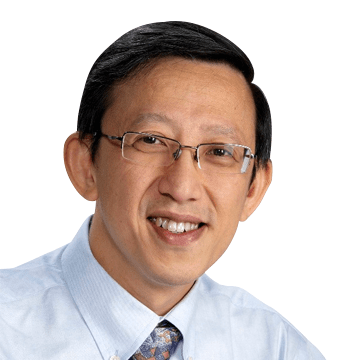 Doctor
Dr Leong Choon Kit
MBBS, M.Med (Public Health), GDFM, MCFP(S), FCFP(S), FAMS (Family Medicine) — Adjunct Assistant Professor, Duke-NUS & NUS
Dr Leong Choon Kit is a family physician and public health advocate with extensive experience in primary care, public policy, and vaccination initiatives. He leads Tampines Family Medicine Clinic and the Class Primary Care Network, and co-authored Singapore's Adult Vaccination Guidelines. An Adjunct Assistant Professor at both Duke-NUS Medical School and NUS, he has spent over a decade mentoring pre-medical students across all three local medical schools and is deeply committed to nurturing the next generation of doctors.
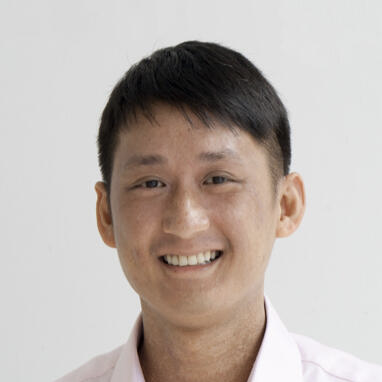 Doctor
Dr Kenneth Tan
MBBS (S'pore), Grad. Dip. Family Medicine, Grad. Dip. Sports Medicine, M.Med (Fam Med), MCFP(S), PG Dip. Clinical Dermatology (UK)
Dr Kenneth Tan is a family physician with a diverse background spanning medical education, dermatology, and sports medicine. He serves as a Council Member of the College of Family Physicians Singapore, Associate Programme Director for the Graduate Diploma in Family Medicine, and Associate Lecturer at NUS. A Sub Lead for the Class Primary Care Network and NUS medical school assessor, he brings first-hand experience of the undergraduate selection process to his practice and mentorship work.
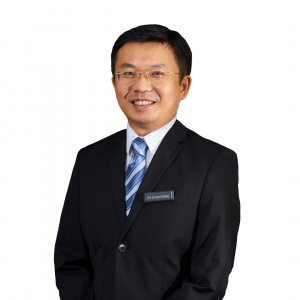 Specialist
Dr John Hsiang
MBChB (NZ), FRACP (Australasia), MD (Doctorate), FRCP (Edinburgh), FAMS (Gastroenterology) — Adjunct Associate Professor, NUS & Duke-NUS
Dr John Hsiang is a gastroenterologist at Mount Elizabeth Hospital with over 15 years of experience in gastrointestinal diseases, fatty liver disease, and viral hepatitis. A graduate of Otago Medical School, he completed post-specialist hepatology research at the Chinese University of Hong Kong, earning a doctorate focused on chronic liver disease. An Adjunct Associate Professor at NUS and Duke-NUS, he has over 25 peer-reviewed publications and brings an international perspective to both clinical practice and medical education.
Written By
About the Writer
 Writer
Timothy Leong
Writer, Content Editor & Marketing Specialist — MMC
Timothy Leong is the writer, content editor, and marketing specialist at MMC. With experience in writing and creating websites for local businesses, he makes sure that everything online runs smoothly.