
This article shares personal experiences and is for informational purposes only. It is not career or medical advice.
- Identical manpower pressures in both sectors — public pay rises (e.g. 7% for nurses) flow through to private.
- Sharp rental increases (10%+ per year post-2020, some $52k/month for tiny spaces).
- Ongoing nurse shortages after redeployments & overseas moves.
- Healthier SG offers partial relief for chronic meds but leaves clinics with tight margins.
Why does healthcare in Singapore keep getting more expensive?
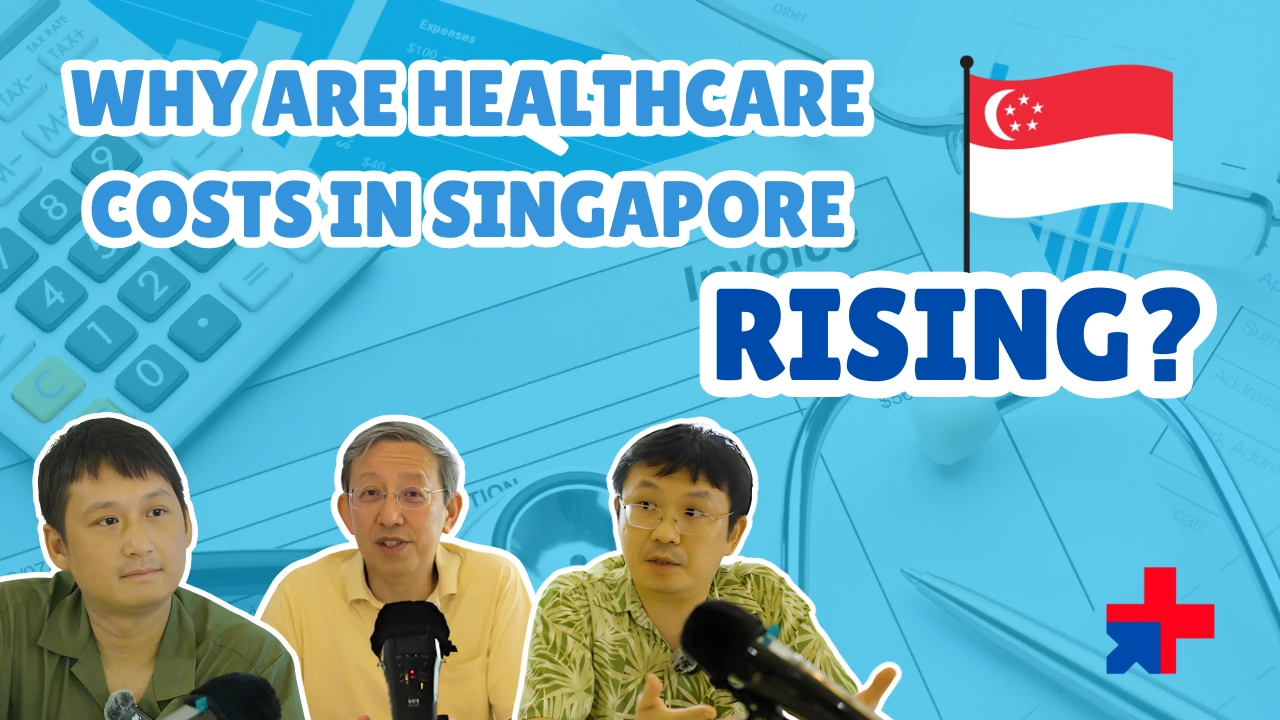
In a recent episode of Uncle Talks Podcast, three Singapore doctors— Dr Kenneth Tan (a private general practitioner), Dr John Hsiang (private gastroenterologist), and Dr Leong Choon Kit (veteran family physician) sat down to unpack a question that weighs on nearly every patient and provider in Singapore.
What began with a discussion of public versus private differences quickly revealed a shared reality: the costs patients feel at the counter are rooted in pressures that doctors themselves face every month.
The doctors spoke with the authority of people who run clinics, book operating theatres, and pay staff salaries. They did not hide the strain. Post-COVID inflation, manpower shortages, and rental spikes have combined to create a cost environment that feels relentless.
Yet their tone remained pragmatic rather than defeatist. They wanted patients to understand the mechanics behind the bills—not to excuse them, but to help make more informed choices.
Manpower: The Cost That Never Stands Still
The most consistent thread running through their discussion was manpower. “Manpower cost is really the same in both public and private,” one doctor stated early on, because doctors and nurses can move between sectors. When public hospitals raise salaries to retain staff, private practices must follow or risk losing talent.
The post-COVID period amplified this dynamic. Nursing salaries in the public sector saw notable increases—around seven per cent in one recent round—and foreign nurses, once a reliable pipeline, have been redeployed or drawn overseas by better offers. Private clinics, already lean, found themselves competing in the same tight labour market.
One doctor described the situation bluntly: “A lot of the nurses have been redeployed or some of the foreign nurses have gone overseas to work and all that, so that adds a lot of pressure to the wages.”
For patients, this translates directly into consultation and procedure fees. Private GPs, who often operate with minimal support staff, face the same wage pressures without the institutional buffers of public hospitals.
The doctors were clear: when staff costs rise, those increases must be absorbed somewhere—usually in the fees charged to patients.
Rental Pressures: The $52,000-a-Month Reality
Rental costs emerged as perhaps the most startling single factor. One doctor recounted a recent listing: “Some of the new HDB rental has gone up as high as $52,000 a month… for just 500 square feet.” The figure hung in the air for a moment, underscoring how dramatically commercial medical space has changed since 2020.
John, the gastroenterologist, added that private hospital and clinic rents have climbed by around ten per cent per year in many cases since the pandemic. “After 2020, 2021 the rental cost… will go up by 10% per annum, year on year on year on year.” For a small GP clinic, such increases represent an existential challenge. Unlike large institutions, private practices cannot easily spread overheads across departments or government funding streams.
The doctors were frank about the implications. Charging patients more is often the only viable response, yet there is a natural ceiling: push fees too high and patients simply go elsewhere. “You really can’t pass on the cost to the patient a hundred per cent,” one noted, “because your pricing, your consultation, everything is fixed.”
The result is a constant balancing act—trying to maintain quality and viability while keeping care accessible.
If you’re still unsure which route suits your situation best, this in-depth look at public vs private healthcare in Singapore covers everything from wait times to ward classes.
Healthier SG: Partial Relief Amid Ongoing Strain
The government’s Healthier SG scheme was raised as an attempt to ease some of these pressures, particularly for chronic care. By allowing private GPs to order subsidised medications through a central purchaser (Alps) and cap prices at polyclinic levels, the programme aims to keep long-term drug costs predictable for patients.
The doctors acknowledged the benefit: “Patients are assured that the amount that they are paying is comparable to that at the polyclinic for their medications.” For those managing multiple chronic conditions, the savings can be substantial.
Yet they were equally clear about the limitations. Clinics receive a Chronic Enrolment Grant based on patient numbers, but “most GP find that this amount is still very small compared to what they could have lost.”
The scheme helps on the medication side, but it does not address consultation fees, rental, or manpower. Several doctors described ongoing negotiations with the Ministry of Health, suggesting that Healthier SG remains a work in progress.
The conversation carried a sense of cautious hope: the initiative shows intent to support private primary care, but it has not yet fully offset the post-COVID cost surge.
For a closer look at what the scheme actually delivers — and where its limits lie — understanding the Healthier SG scheme helps set realistic expectations for both patients and the clinics serving them.
The Unbreakable Triad: Good, Fast, Cheap
Toward the end of the discussion, the doctors distilled the entire cost conversation into a simple, unforgiving truth: in healthcare, as in many things, you cannot have good quality, fast access, and low cost simultaneously.
Private care often delivers quality and speed—scans and scopes within days rather than months—but at a price that reflects the absence of heavy subsidies. Public care remains more affordable, backed by Medifund for the neediest, but queues can stretch long.
One doctor used a familiar analogy: “Like for example if you eat at McDonald’s it’s cheap and fast… it’s not gonna be decent food.” The comparison was light, but the point was serious. Patients must decide which elements matter most to them.
The doctors urged transparency and trust. They encourage patients to ask about costs upfront, to understand the trade-offs, and to lean on GPs who know the system well enough to guide referrals wisely—whether to public named consultants or trusted private specialists.
Looking Ahead: A System Under Strain, But Still Committed
Singapore’s healthcare costs are rising because the inputs—people, space, equipment—are all becoming more expensive in the post-COVID world. Private providers feel this most acutely, lacking the subsidy buffers of public institutions, yet they continue to deliver care with the same core motivation.
The doctors did not pretend the pressures would vanish soon. They spoke of ongoing dialogue with policymakers, of clinics finding ways to adapt through efficiency or upscaling, and of patients making choices based on honest information. One summed up the shared ethos: “At the end of the day we all doctors, we all try to help our patients.”
For Singaporeans navigating bills that feel higher each year, that commitment remains the constant.
Understanding the forces behind the rise—manpower competition, rental shocks, partial subsidy bridges—does not make costs disappear, but it does empower patients to ask better questions, weigh options more clearly, and appreciate the quiet balancing act that keeps clinics open and care available.
Want to hear more about the doctor’s opinion on healthcare in Singapore? Listen to the original Uncle Talks Podcast.
RISING HEALTHCARE COSTS
Frequently Asked Questions
Why are healthcare costs rising in Singapore after COVID?
Main drivers are manpower cost increases (public & private pay rises match each other) and sharp rental hikes for clinics and hospitals since 2020–2021.
How much have clinic rents gone up post-COVID?
Many private medical suites see 10% annual increases. Some new HDB clinic spaces now list at $52,000 per month for only 500–600 square feet.
Do public and private healthcare face the same cost pressures?
Yes — especially manpower. Doctors and nurses can work in either sector, so public pay rises (e.g. 7% for nurses recently) force private clinics to match wages.
How has the nursing shortage affected costs?
Post-COVID, many nurses were redeployed or moved overseas for better pay, tightening supply and pushing wages higher in both public and private settings.
Does Healthier SG reduce the impact of rising costs?
Partially — it caps chronic medication prices at polyclinic levels via central purchasing, but the Chronic Enrolment Grant is small and doesn’t offset rent or manpower rises.
Can patients still get affordable care despite rising costs?
Yes — public hospitals remain heavily subsidised (with Medifund for the needy), while private care offers faster access. Doctors recommend being upfront about costs and choosing based on urgency and budget.
Medically Reviewed
About the Experts
 Doctor
Dr Leong Choon Kit
MBBS, M.Med (Public Health), GDFM, MCFP(S), FCFP(S), FAMS (Family Medicine) — Adjunct Assistant Professor, Duke-NUS & NUS
Dr Leong Choon Kit is a family physician and public health advocate with extensive experience in primary care, public policy, and vaccination initiatives. He leads Tampines Family Medicine Clinic and the Class Primary Care Network, and co-authored Singapore's Adult Vaccination Guidelines. An Adjunct Assistant Professor at both Duke-NUS Medical School and NUS, he has spent over a decade mentoring pre-medical students across all three local medical schools and is deeply committed to nurturing the next generation of doctors.
 Doctor
Dr Kenneth Tan
MBBS (S'pore), Grad. Dip. Family Medicine, Grad. Dip. Sports Medicine, M.Med (Fam Med), MCFP(S), PG Dip. Clinical Dermatology (UK)
Dr Kenneth Tan is a family physician with a diverse background spanning medical education, dermatology, and sports medicine. He serves as a Council Member of the College of Family Physicians Singapore, Associate Programme Director for the Graduate Diploma in Family Medicine, and Associate Lecturer at NUS. A Sub Lead for the Class Primary Care Network and NUS medical school assessor, he brings first-hand experience of the undergraduate selection process to his practice and mentorship work.
 Specialist
Dr John Hsiang
MBChB (NZ), FRACP (Australasia), MD (Doctorate), FRCP (Edinburgh), FAMS (Gastroenterology) — Adjunct Associate Professor, NUS & Duke-NUS
Dr John Hsiang is a gastroenterologist at Mount Elizabeth Hospital with over 15 years of experience in gastrointestinal diseases, fatty liver disease, and viral hepatitis. A graduate of Otago Medical School, he completed post-specialist hepatology research at the Chinese University of Hong Kong, earning a doctorate focused on chronic liver disease. An Adjunct Associate Professor at NUS and Duke-NUS, he has over 25 peer-reviewed publications and brings an international perspective to both clinical practice and medical education.
Written By
About the Writer
 Writer
Timothy Leong
Writer, Content Editor & Marketing Specialist — MMC
Timothy Leong is the writer, content editor, and marketing specialist at MMC. With experience in writing and creating websites for local businesses, he makes sure that everything online runs smoothly.