This article shares personal experiences and is for informational purposes only. It is not career or medical advice.
TL;DR – Alternative Routes to Medicine
- IMU twinning: Start pre-med in Malaysia, transfer overseas (UK/Australia/Ireland), earn foreign degree — often bonded to serve in Malaysia.
- Australian foundational courses: 1–2 year pre-uni programmes lead to Sydney/Melbourne medical schools via agents.
- Duke-NUS postgraduate: 4-year MD open to any bachelor’s degree holder — values maturity & diverse backgrounds.
- These routes expand options beyond local A-Level/IB competition.
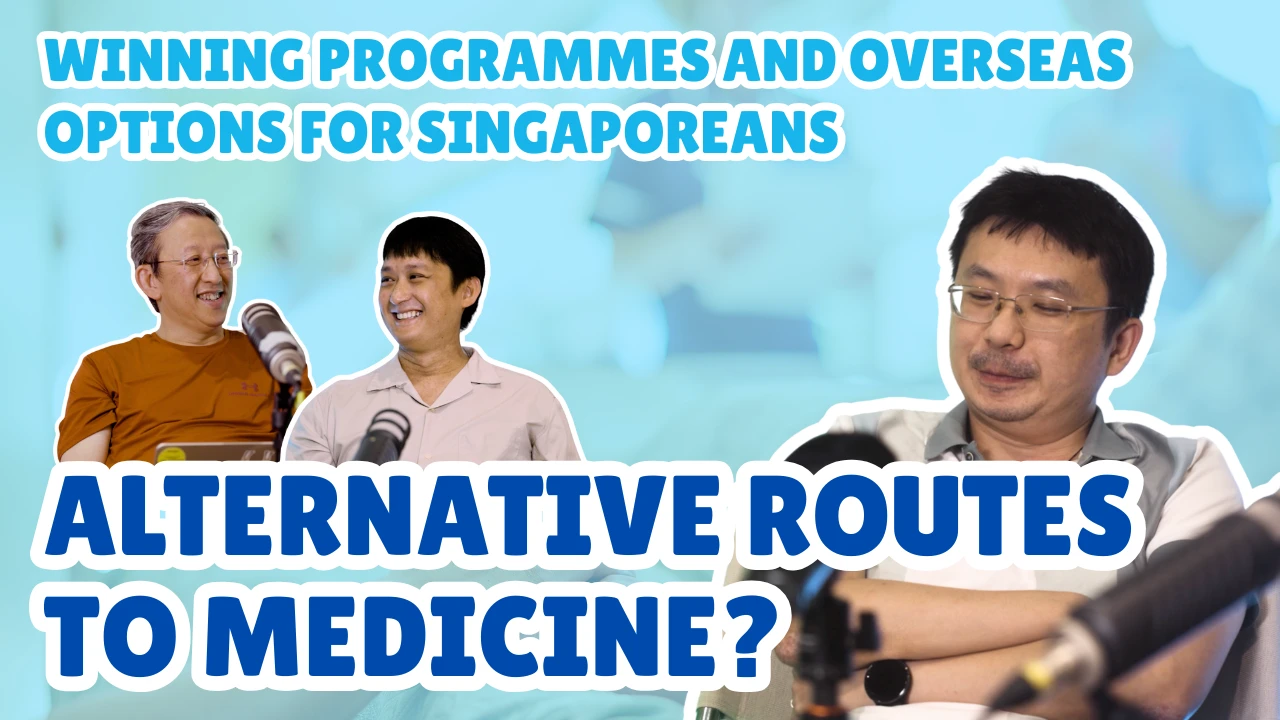
In the first episode of Uncle Talks Podcast, three experienced Singapore doctors — Dr Kenneth Tan (a private GP and NUS assessor), Dr John Hsiang (a gastroenterologist trained in New Zealand and Australia) and Dr Leong Choon Kit (a family physician who has taught across all three local medical schools) —opened a window into a topic many young Singaporeans quietly consider when local medical school places feel out of reach.
The conversation drifted to pathways beyond the fiercely competitive A-Level and IB routes, revealing a patchwork of alternative routes that Singaporean students have used to enter the profession. What emerged was not a list of shortcuts, but a grounded discussion of real options—twinning programmes, foundational courses abroad, and postgraduate entries—that expand the map for determined applicants.
The doctors spoke with the authority of people who have seen hundreds of pre-med students pass through their clinics and lecture theatres. They did not romanticise these paths. Instead, they offered a clear-eyed view: these alternatives exist because the local system, while excellent, can accommodate only a limited number each year.
For many capable students who fall short of the near-perfect grades required for NUS or NTU interviews—or who simply want international exposure—these routes represent legitimate, if sometimes more expensive or complex, ways forward.
Twinning Programmes: The IMU Model and Its Realities
One of the most concrete alternatives the doctors discussed was the twinning programme offered by the International Medical University (IMU) in Malaysia. Under this arrangement, students begin their pre-medical studies in Malaysia before transferring to a partner university overseas—often in the United Kingdom, Australia, or Ireland—for the clinical years. Upon graduation, they receive a degree from the twinning partner institution.
Dr Leong Choon Kit brought up the example directly: “The Malaysian International Medical School… you do a pre-med in IMU and then after that with that result you twin with one of the overseas university… then when you graduate you will get a degree from the twin university.” Dr John Hsiang added that he had encountered IMU students during his time in New Zealand, noting that many were bonded and required to return to Malaysia to serve after graduation.
The doctors were careful to highlight the practical implications. For Singaporeans, the appeal lies in bypassing the intense local competition while still earning a recognised medical degree. However, the bonding requirement—often tied to government scholarships—means participants must return to Malaysia to practise for a set period unless they repay the bond.
This makes the route more suitable for those who are open to working regionally or who have personal ties to Malaysia. The conversation made clear that while twinning programmes broaden access, they come with strings attached that students must weigh carefully.
Foundational Courses in Australia: A Bridge to Overseas Medical Schools
Another pathway that surfaced was the use of foundational or pre-university courses in Australia, often arranged through education agents. Students who have completed secondary education in Singapore enrol in these one- or two-year programmes, which prepare them for Australian university entrance exams. Successful completion allows direct entry into Australian medical schools, particularly in Sydney and Melbourne, where such arrangements are more common.
Dr Kenneth Tan described the process: “Some of the student from Singapore… they will apply through an agent to a college to do foundational courses… like a pre-university post high school kind of 1 or 2 years… and then they take the Australian exams and with that grade they will actually get to the Australian medical school.” The doctors noted that many Australian medical schools have formal links with these foundational providers, making the transition structured rather than ad hoc.
This route appeals to students who prefer the Australian medical education model—often a mix of undergraduate and graduate-entry programmes—or who seek the cultural and professional exposure of training abroad. The doctors implied that these students tend to be self-funded or supported by family, as government subsidies are limited for overseas study.
The pathway requires careful planning, strong academic performance in the foundational year, and the financial capacity to cover international tuition and living costs. Yet for those who succeed, it offers a recognised medical degree and the option to return to Singapore for registration after meeting the Singapore Medical Council’s requirements.
Postgraduate Maturity: Duke-NUS and the Second-Chance Model
Although the doctors touched on Duke-NUS Medical School earlier in the conversation, the discussion of alternative routes naturally circled back to it as a powerful postgraduate option. Unlike the five-year undergraduate programmes at NUS and NTU, Duke-NUS offers a four-year MD designed for graduates of any discipline.
Dr John Hsiang observed that in New Zealand and Australia, around 25 per cent of medical students were postgraduates, bringing maturity that direct school-leavers sometimes lack. Dr Kenneth Tan reinforced this: “They are what I call adult learners… they’re more serious in their work, a lot more committed.” Dr Leong Choon Kit added that these students often display greater responsibility, having already navigated a first degree and perhaps a different career path.
The appeal for Singaporeans is clear: a prior bachelor’s degree—whether in arts, music, theology, or any field—can serve as the entry ticket. The doctors’ tone suggested that Duke-NUS values the diverse perspectives and life experience these students contribute, qualities that enrich the learning environment and prepare them for the complexities of modern medicine.
For applicants who missed undergraduate entry or discovered their calling later, this route offers not a consolation prize, but a deliberate, mature pathway into the profession.
If you are weighing this decision, reflect on whether medicine is the right path for you by hearing from those who have already taken the step.
The Bigger Picture: Expanding Possibilities Without Lowering Standards
By the end of their exchange, the doctors had painted a picture of a medical education ecosystem that, while intensely competitive locally, is far from closed. Twinning programmes, Australian foundational courses, and postgraduate entries like Duke-NUS provide genuine alternatives for capable students who fall outside the traditional A-Level or IB funnel.
These paths are not easier—they demand strong academics, financial resources, and often a willingness to study or serve abroad—but they are credible and increasingly well-trodden.
The doctors’ tone carried an implicit message of encouragement tempered by realism. They did not promise that any route guarantees success, nor did they downplay the challenges of international study or bonding obligations.
Instead, they offered perspective: medicine needs committed individuals from varied backgrounds, and Singapore’s system—both local and through international links—makes room for them.
For young Singaporeans staring at rejection letters or weighing their options after polytechnic or university, these stories serve as quiet proof that the journey need not end at the local admissions office.
With careful planning, resilience, and a clear sense of purpose, alternative routes can lead to the same white coat and the same opportunity to serve.
As one doctor reflected toward the end, the variety of paths ultimately strengthens the profession: different starting points bring different strengths, and medicine is richer for it.
Want to hear more about resilience, timing, and the real-life moments that shape a medical career? Listen to the original Uncle Talks Podcast.
FAQ – Alternative Routes to Medicine
1) What is a twinning programme like IMU for Singapore students?
You complete pre-medical studies at IMU in Malaysia, then transfer to a partner university overseas (e.g. UK, Australia) for clinical years. You graduate with a degree from the partner institution.
2) Are twinning programme graduates bonded to serve in Malaysia?
Many are — especially if government-sponsored. John noted he met bonded IMU students in New Zealand who had to return to Malaysia to practise unless they repaid the bond.
3) How do Australian foundational courses work for Singaporeans?
Students enrol in 1–2 year pre-university/foundation programmes (often via agents), take Australian exams, and gain entry to medical schools in Sydney, Melbourne or other cities with formal links.
4) Who can apply to Duke-NUS Medical School?
Anyone with a bachelor’s degree in any discipline — arts, music, theology, etc. It’s a 4-year postgraduate MD programme that values the maturity and diverse perspectives of older students.
5) Do postgraduate students at Duke-NUS bring advantages?
Yes — doctors observed they are “adult learners… more serious in their work, a lot more committed” and often show greater responsibility compared to direct school-leavers.
6) Can graduates from overseas or twinning programmes practise in Singapore?
Yes — after meeting Singapore Medical Council registration requirements (e.g. exams, housemanship). The degree must be from a recognised institution.
Medically Reviewed
About the Experts
 Doctor
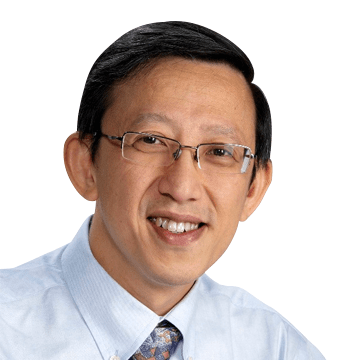
Dr Leong Choon Kit
MBBS, M.Med (Public Health), GDFM, MCFP(S), FCFP(S), FAMS (Family Medicine) — Adjunct Assistant Professor, Duke-NUS & NUS
Dr Leong Choon Kit is a family physician and public health advocate with extensive experience in primary care, public policy, and vaccination initiatives. He leads Tampines Family Medicine Clinic and the Class Primary Care Network, and co-authored Singapore's Adult Vaccination Guidelines. An Adjunct Assistant Professor at both Duke-NUS Medical School and NUS, he has spent over a decade mentoring pre-medical students across all three local medical schools and is deeply committed to nurturing the next generation of doctors.
 Doctor
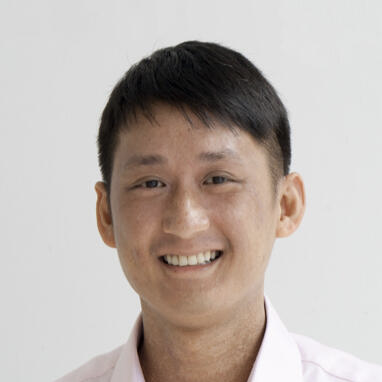
Dr Kenneth Tan
MBBS (S'pore), Grad. Dip. Family Medicine, Grad. Dip. Sports Medicine, M.Med (Fam Med), MCFP(S), PG Dip. Clinical Dermatology (UK)
Dr Kenneth Tan is a family physician with a diverse background spanning medical education, dermatology, and sports medicine. He serves as a Council Member of the College of Family Physicians Singapore, Associate Programme Director for the Graduate Diploma in Family Medicine, and Associate Lecturer at NUS. A Sub Lead for the Class Primary Care Network and NUS medical school assessor, he brings first-hand experience of the undergraduate selection process to his practice and mentorship work.
 Specialist
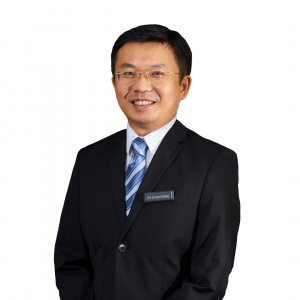
Dr John Hsiang
MBChB (NZ), FRACP (Australasia), MD (Doctorate), FRCP (Edinburgh), FAMS (Gastroenterology) — Adjunct Associate Professor, NUS & Duke-NUS
Dr John Hsiang is a gastroenterologist at Mount Elizabeth Hospital with over 15 years of experience in gastrointestinal diseases, fatty liver disease, and viral hepatitis. A graduate of Otago Medical School, he completed post-specialist hepatology research at the Chinese University of Hong Kong, earning a doctorate focused on chronic liver disease. An Adjunct Associate Professor at NUS and Duke-NUS, he has over 25 peer-reviewed publications and brings an international perspective to both clinical practice and medical education.
Written By
About the Writer
 Writer
Timothy Leong
Writer, Content Editor & Marketing Specialist — MMC
Timothy Leong is the writer, content editor, and marketing specialist at MMC. With experience in writing and creating websites for local businesses, he makes sure that everything online runs smoothly.